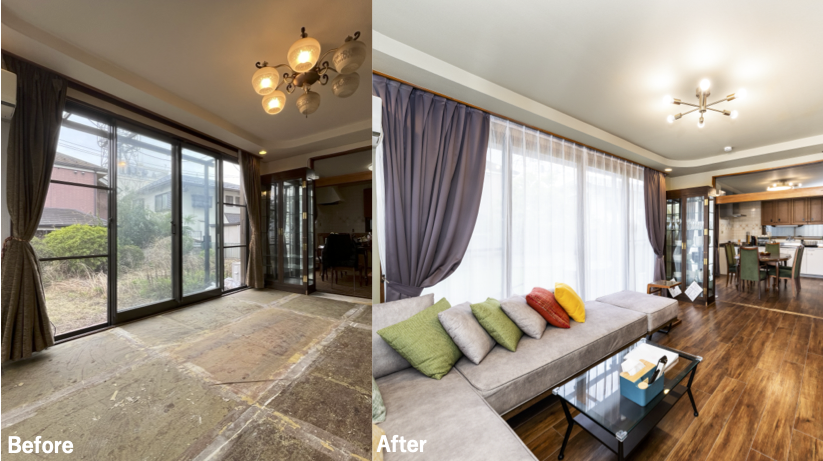
In one of our early projects, we learned an important lesson about dealing with neighbors.
In Japan, launching a short-term rental begins with advance notification. Operators are required to notify nearby residents either by posting written notices or by explaining the project in person. If objections are raised within a specified period, those concerns and the proposed responses must be summarized in the application.
At the time, we were short on time and completed the notification by posting written notices only.
In central Tokyo, this might not have caused much reaction.
But this property was located in a quiet residential area of Tokyo, on a narrow private road shared by six elderly households.
One week later, one of the shared road owners called and requested an explanatory meeting.
In short-term rentals, the main concerns are usually garbage and noise. We prepared a summary of the preventive measures and response systems we had already implemented in other operating properties.
On the day of the meeting, all five neighboring households attended. Through their connections, even a city council member joined.
Before we could begin explaining the project, opposition voices were raised. Some residents were visibly upset. One person even made a comment that bordered on a threat.
The atmosphere was tense.
During the meeting, we clarified three points.
First, we were following proper procedures under the Residential Lodging (Minpaku) Act.
Second, neighbors do not have the authority to stop a properly filed operation.
Third, we explained our garbage control measures, noise prevention policies, and our commitment to respond promptly if any issue arose.
Most eventually accepted the situation, though not comfortably. A few remained emotionally opposed.
We began the interior renovation after submitting the short-term rental application, as approval typically takes several weeks.
We wanted to avoid further friction, so every time we visited the property, we greeted the neighbors and asked our contractors to do the same.
Over the next few months, the atmosphere gradually changed. The tension eased and conversations became easier.
By the time construction was completed, we were on good enough terms to be invited into one of the neighbors’ homes for tea.
After operations began, they allowed our cleaners to temporarily park on the shared private road during cleaning.
Today, the property operates with consistent five-star reviews.
From this experience, we took away two lessons.
First, especially in quieter neighborhoods and among elderly residents, investing time in relationships matters. What appears to be opposition is often uncertainty.
Second, while many short-term rental issues relate to garbage and noise management, some conflicts stem from insufficient communication.
Since then, whenever necessary, we conduct advance notification in person and bring a small gift as a courtesy. We make a deliberate effort to communicate early and consistently. We also mention that we occasionally look for part-time cleaning staff — and in a few cases, neighbors have joined our team.
Proper operations are essential.
But in our experience, communication with the local community can be just as important for long-term stability.