What Happens on Settlement Day?

We previously explained how overseas buyers can prepare the funds needed to complete a property purchase in Japan. Payment Preparation When Buying Property in Japan
Once the funds are ready, what happens on settlement day? The judicial scrivener first verifies the buyer’s and seller’s identities and checks the registration documents. The buyer then pays the remaining purchase price, the seller confirms receipt and hands over the property, and the judicial scrivener files the ownership transfer application. Let’s look at each step in more detail.
1. The Judicial Scrivener Confirms That the Transfer Can Proceed
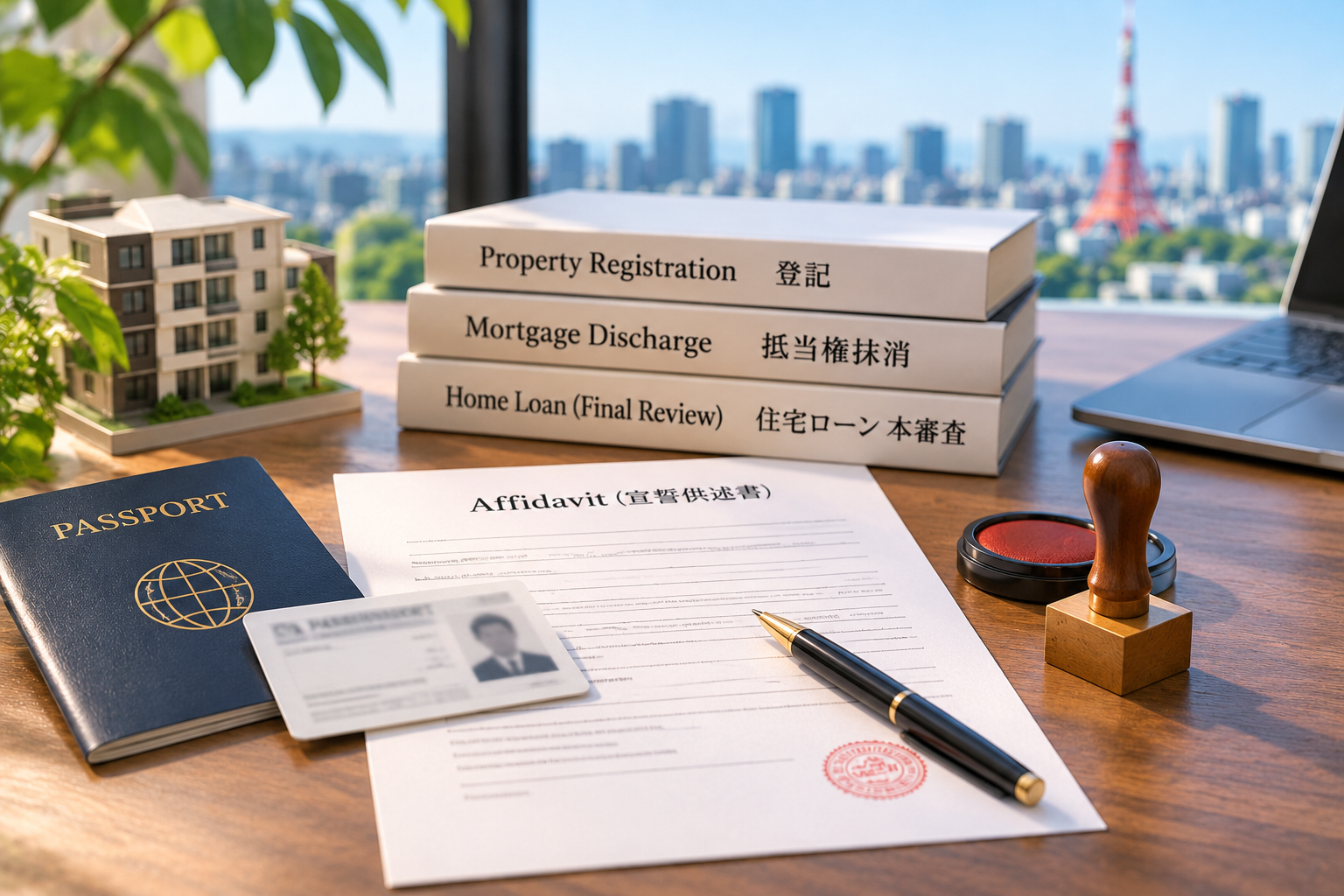
Before the buyer pays the balance, the judicial scrivener (司法書士) checks both parties’ identification and reviews the seller’s title deed. The buyer and seller sign the documents needed to authorize the scrivener to file on their behalf, and the scrivener confirms that the paperwork is in order.
(For a remote settlement, the identity checks and signing are arranged ahead of time, and the parties coordinate the payments and handover in real time on the day.)
If the seller plans to repay an existing mortgage from the sale proceeds, the scrivener coordinates with the seller’s lender in advance. The lender confirms how the loan will be repaid and when it will release the documents needed to remove the mortgage from the property register.
If a required document is missing or the arrangements cannot be confirmed, settlement may need to be postponed.
2. The Payments Are Made and the Seller Confirms Receipt
Once the judicial scrivener confirms that the paperwork is ready, the buyer pays the remaining purchase price. If the buyer is using a mortgage, the lender typically releases the loan funds at this stage. If an escrow provider or real estate agent is holding the buyer’s funds in Japan, they make the agreed transfers on the buyer’s behalf.
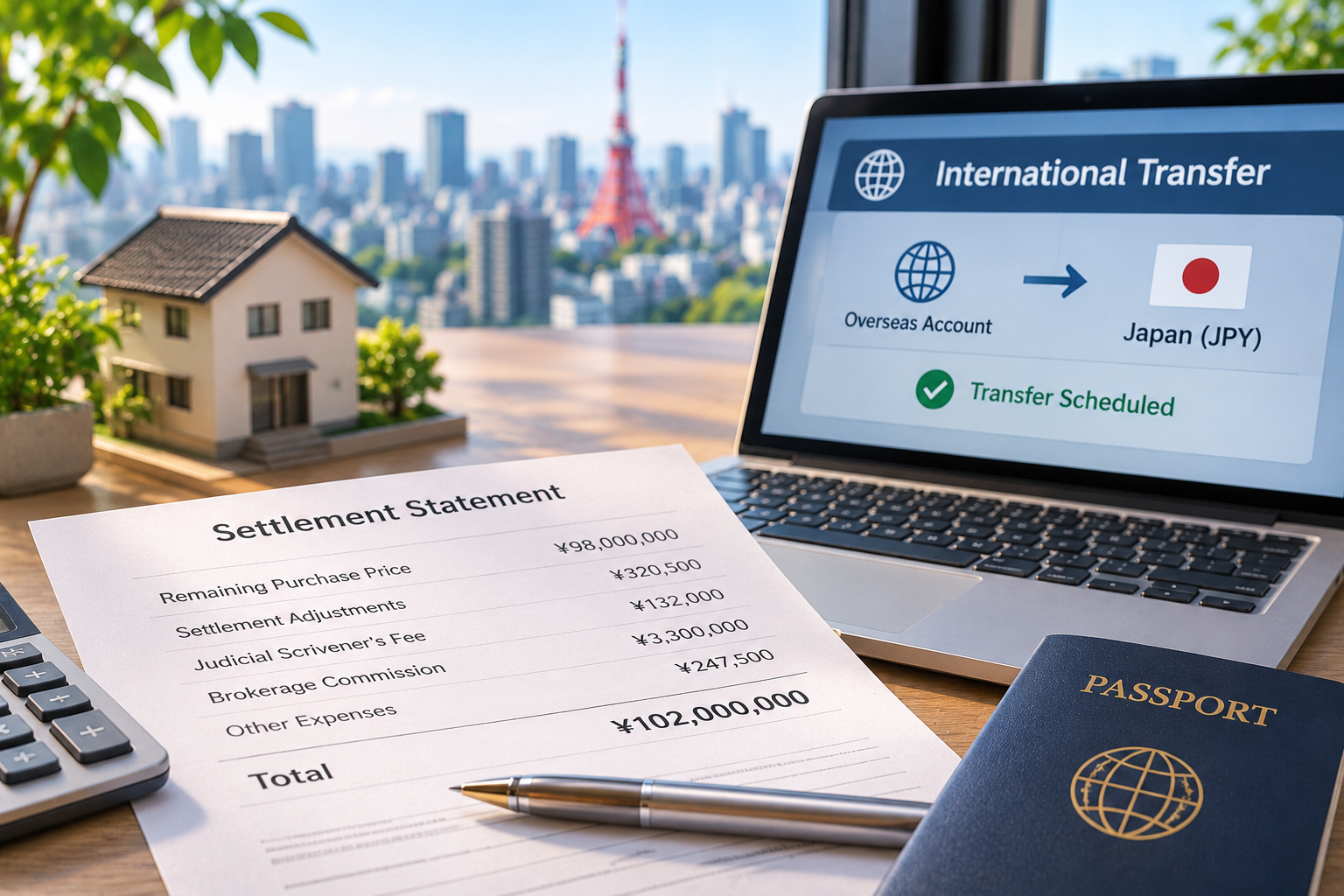
Before settlement, the real estate agent coordinates with everyone involved and prepares a settlement statement showing how much goes to each recipient. The seller receives the balance of the purchase price and any agreed adjustments, such as reimbursement for the buyer’s share of prepaid property taxes or building management fees. The judicial scrivener receives the registration costs and their fee, and the buyer and seller each pay any brokerage commission they owe at settlement. An overseas buyer may send a single international transfer in advance to cover several payments on the day.
The buyer usually pays the balance by bank transfer. The seller checks that the funds have arrived before handing over the property, so part of the appointment can be spent waiting for the transfer to come through.
3. The Seller Hands Over the Property and the Scrivener Files for Registration
Under a typical resale agreement, ownership passes when the seller receives the full purchase price. The seller then hands over the keys and any other items agreed in the contract, such as property documents or manuals for installed equipment.
The judicial scrivener typically files the ownership transfer application with the Legal Affairs Bureau that same day. Where applicable, the scrivener also files the applications to remove the seller’s mortgage and register the buyer’s new mortgage. The bureau reviews the applications and updates the property register after settlement.
This is one reason settlements often start in the morning. An early start leaves time for the bank transfers to clear, for the scrivener to collect any mortgage release documents from the seller’s lender, and for the applications to be filed that day. If you have flexibility, we recommend avoiding the last banking day of the month, when a higher volume of transfers can mean a longer wait.
4. Why the Order Matters
The sequence protects both sides. The buyer pays once the scrivener has checked that the transfer can be registered. The seller hands over the property once payment is confirmed. The scrivener can then file promptly with the documents in hand.
There’s still work to do after you get the keys. Whether you’re moving in yourself or planning to rent out a second home when you’re away, you’ll need to arrange utilities and internet and get any furniture and appliances you need in place.
If you’re moving in, you can do much of this as you settle in. For short-term and mid-term rentals, the order matters because it affects how soon you can start renting and what you spend along the way.
In the final article in this series, we’ll share how we get a property ready to rent, find tenants or guests, and manage it once it’s rented. We’ll explain what we arrange first, what we can do in parallel, and what needs to be ready before the first tenant or guest arrives.