ID Verification When Buying Property in Japan
In our previous article, Reviewing and Signing the Purchase Agreement in Japan, we discussed the documents involved in a property purchase and the process of signing the agreement.
Once the agreement has been signed and the deposit paid, the next step is to prepare for settlement, including verifying the identities of both the buyer and seller.
For residents of Japan, this is usually straightforward. However, for overseas buyers, the process can be more complicated than expected.
1. ID Verification for Overseas Buyers
For residents of Japan, the necessary documents typically include a Certificate of Residence (住民票) and, where required, a Seal Registration Certificate (印鑑証明書). These can generally be obtained from local government offices or, for eligible residents, convenience stores.
For overseas buyers who do not have these documents, the process is different.
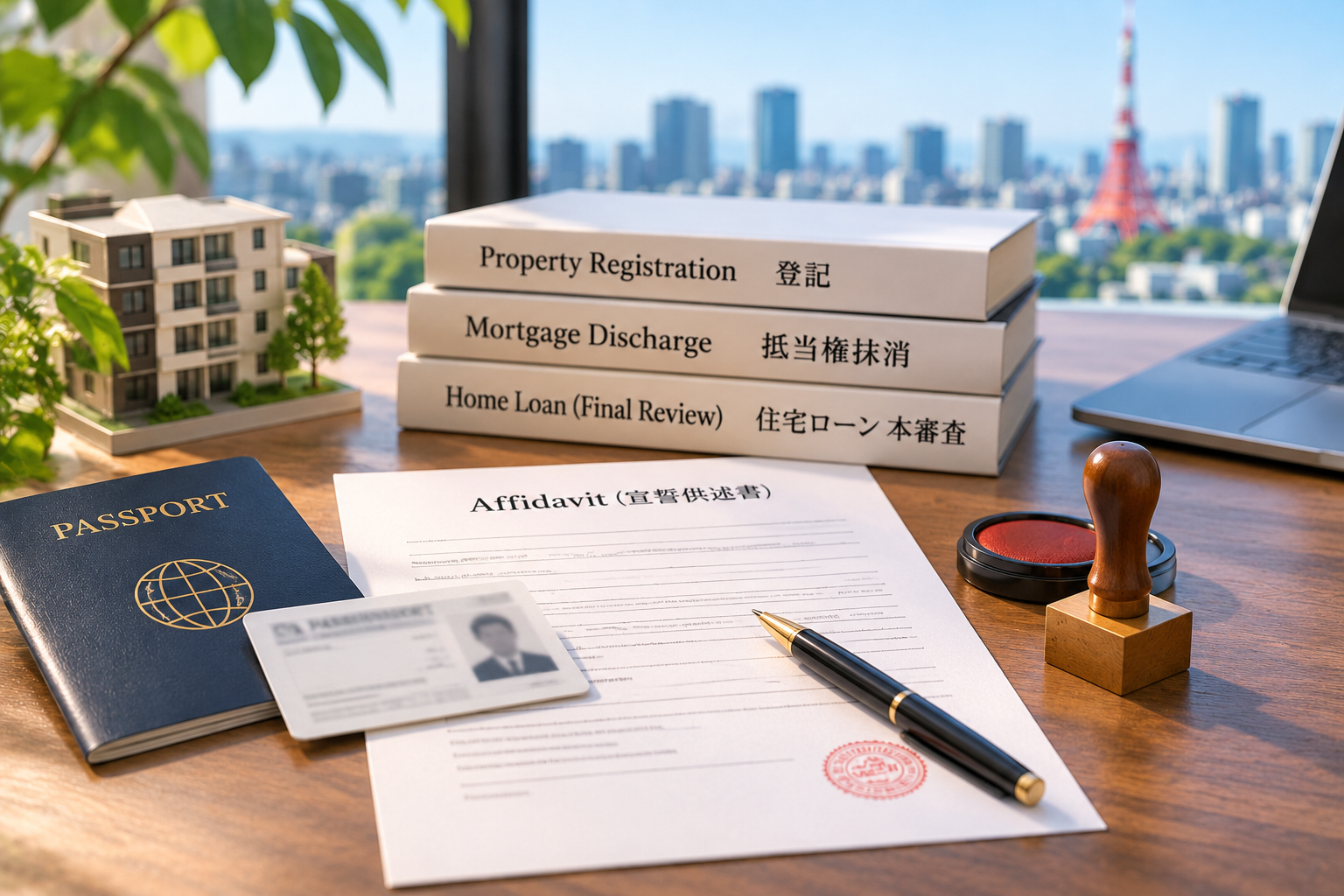
A common approach is to prepare an affidavit (宣誓供述書) confirming personal information such as the buyer’s name, address, and signature.
Depending on the buyer’s nationality, country of residence, and the requirements of the judicial scrivener handling the registration, the affidavit may need to be notarized or certified by an embassy, consulate, or notary public, and supported by government-issued identification documents.
While this may sound straightforward, we have encountered various practical difficulties:
- Embassy appointments are unavailable for several weeks.
- The embassy does not provide the required certification service, or has discontinued it.
- A notary public does not handle documents intended for use overseas, or cannot certify certain foreign documents.
- The buyer’s registered address or identification documents are outdated, requiring additional procedures before certification can take place.
In some cases, buyers have even needed to return to their country of residence to update their address before obtaining the necessary documents.
Once the affidavit has been certified, the original documents may need to be sent to Japan for review by the judicial scrivener (司法書士) responsible for registering the ownership transfer.
Even if the settlement date has already been agreed upon, the judicial scrivener needs to confirm that the required documents are, or are expected to be, in order by that date.
This is why we recommend beginning the process as soon as the purchase agreement has been signed, rather than waiting until settlement approaches.
2. ID Verification for Sellers
The seller must also complete identity and ownership verification.
In Japan, property owners are generally issued a physical title deed (権利証・登記識別情報) when their ownership is registered.
The title deed is normally issued only once and is an important document used in subsequent ownership transfers.
The judicial scrivener checks the seller’s identity, title deed, and other required documents to confirm that the ownership transfer can proceed.
However, complications can arise here as well.
For example, the seller may have lost the title deed, the address recorded in the property register may be outdated, or their identification documents may not reflect their current address.
These issues can usually be resolved through additional procedures, although they may involve extra costs and time.
Even when both parties are ready to proceed, incomplete documentation on the seller’s side can delay settlement.
3. Mortgage Discharge and Final Loan Approval
Although these are separate from identity verification, two other important procedures can take place between signing the purchase agreement and settlement.
Mortgage Discharge (抵当権抹消)
If the seller has an outstanding mortgage, arrangements must be made with their lender to repay the loan and release the mortgage at settlement.
The time required varies between banks. Some can arrange this relatively quickly, while others may require as long as six to eight weeks.
Depending on the loan terms, early repayment fees may also apply.
For this reason, sellers should contact their lender promptly after signing the purchase agreement, particularly when the agreed settlement date is relatively close.
Final Mortgage Approval (住宅ローン本審査)
If the buyer is financing the purchase, this is also generally when the formal mortgage application is submitted.
In many transactions, sellers are reluctant to sign a purchase agreement unless the buyer has already obtained preliminary mortgage approval.
However, the extent of the preliminary review varies between lenders. During the final review, banks may request additional documents that were not required earlier, and obtaining these documents can take time.
We have also encountered cases where the final review itself took several weeks.
For this reason, buyers should submit their formal mortgage application and prepare the necessary documents as early as possible.
4. Preparing for Settlement
None of these procedures is necessarily difficult, but coordinating them from overseas can take more time than expected.
An unavailable embassy appointment, an outdated address, a missing title deed, or a delay in mortgage discharge can affect the entire transaction schedule.
Once the agreement is signed and the deposit is paid, it may feel as though the most important work has already been completed.
However, the period between signing and settlement is not simply a waiting period.
We recommend starting the necessary documentation and banking procedures as early as possible, even if the settlement date is still several weeks away.
In our next article, we will discuss Payment Preparation, including how overseas buyers can arrange the funds required to complete their property purchase in Japan.